Read the case study
The brief
Finhabit is a boutique agency with more than a hundred properties on its books across 27 districts. The problem wasn’t inventory but infrastructure: operations were scattered across spreadsheets, chats and an external CRM that didn’t fit how the team works, and the brand had no home of its own to show what it managed.
What I did
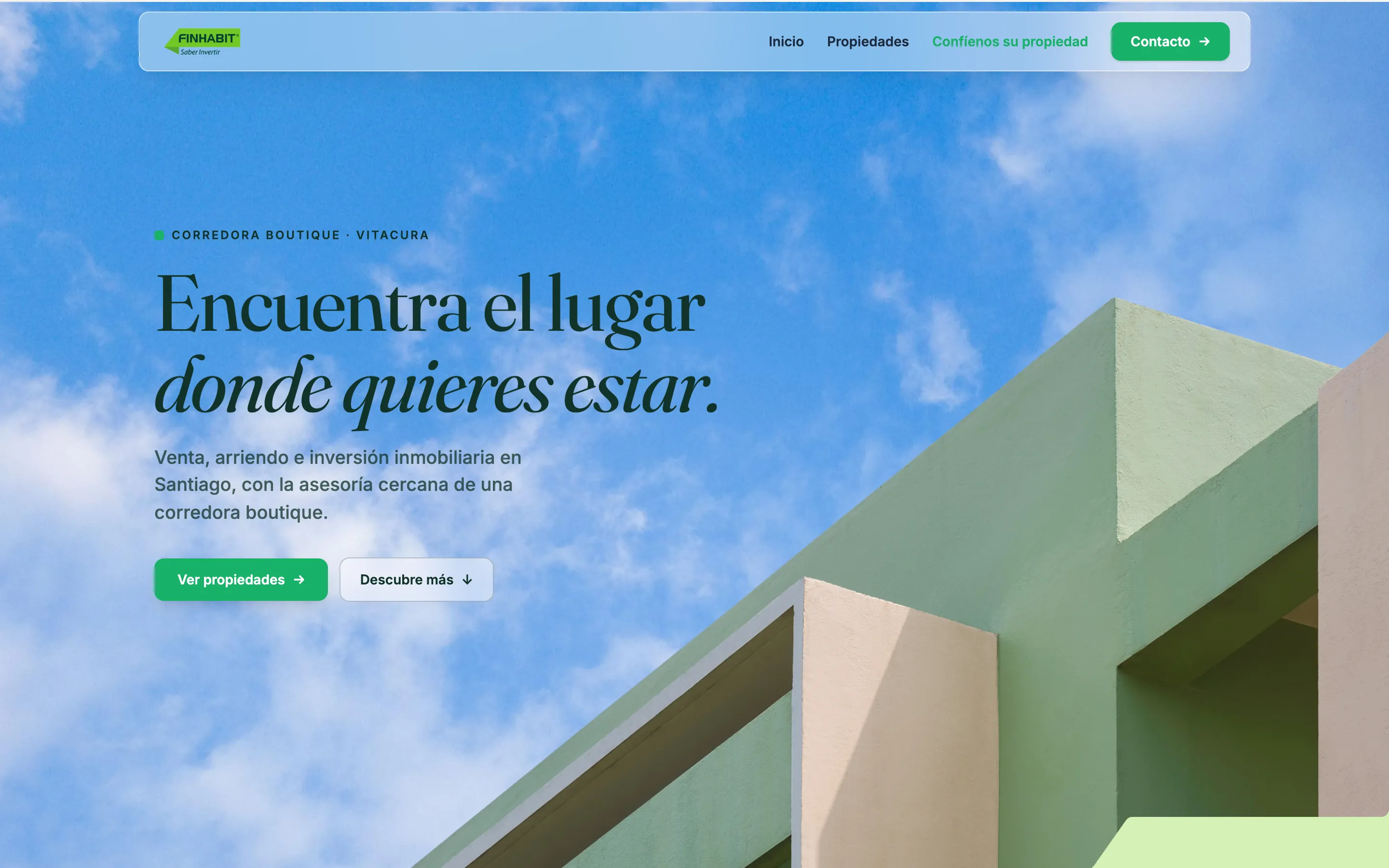
I joined as marketing lead and ended up building the whole infrastructure: an in-house CRM for the team, a public website connected to it and the brand video.
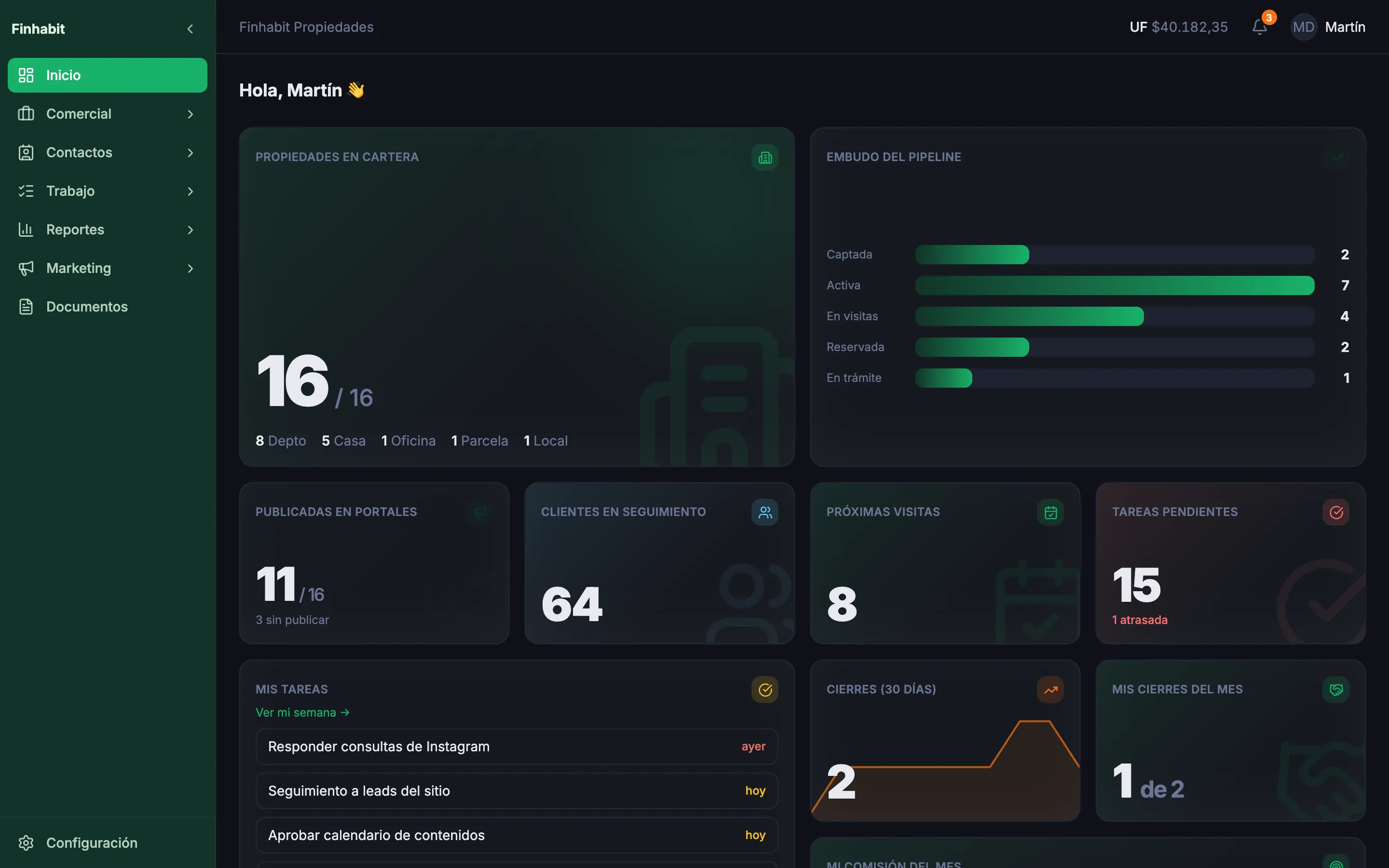
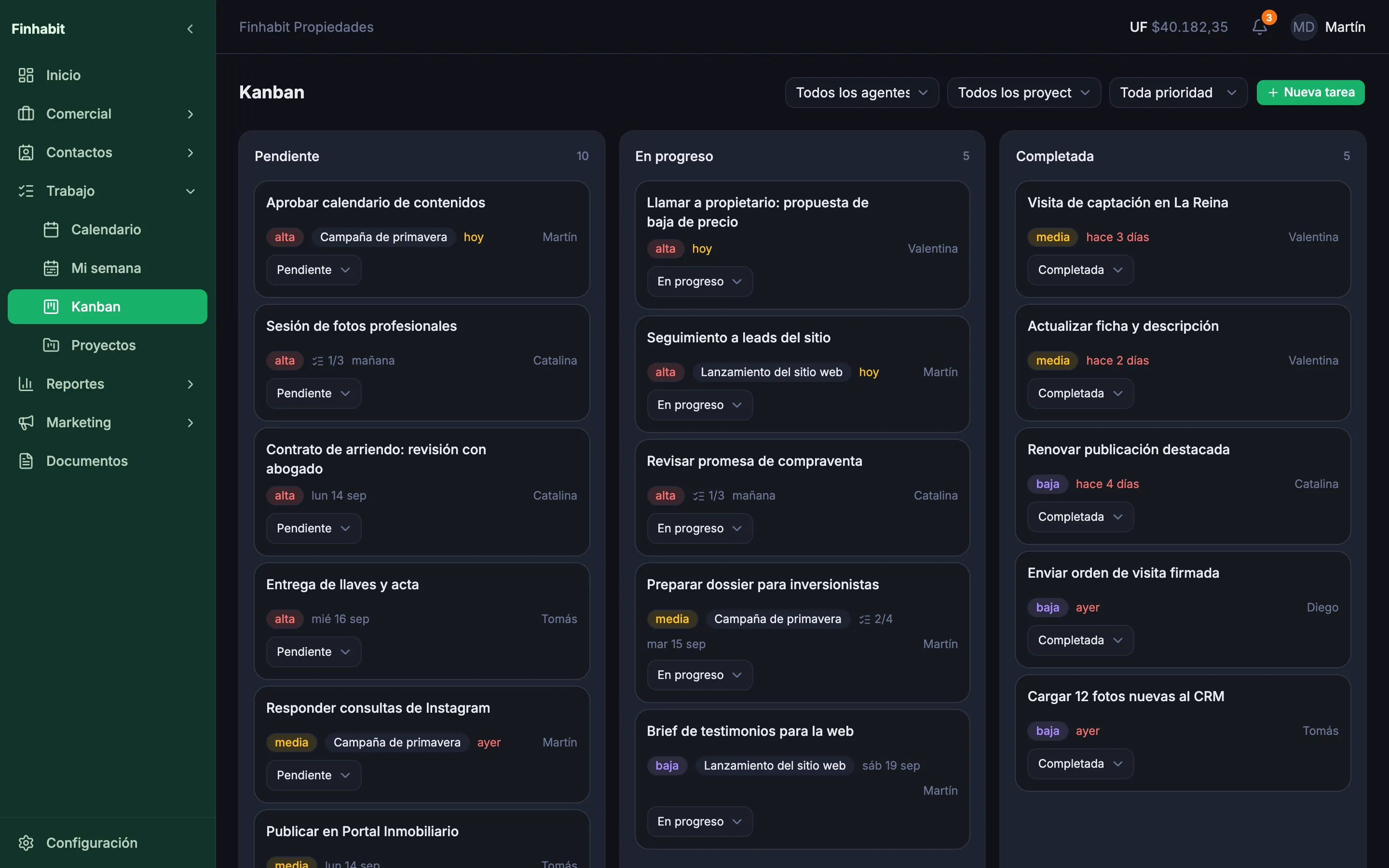
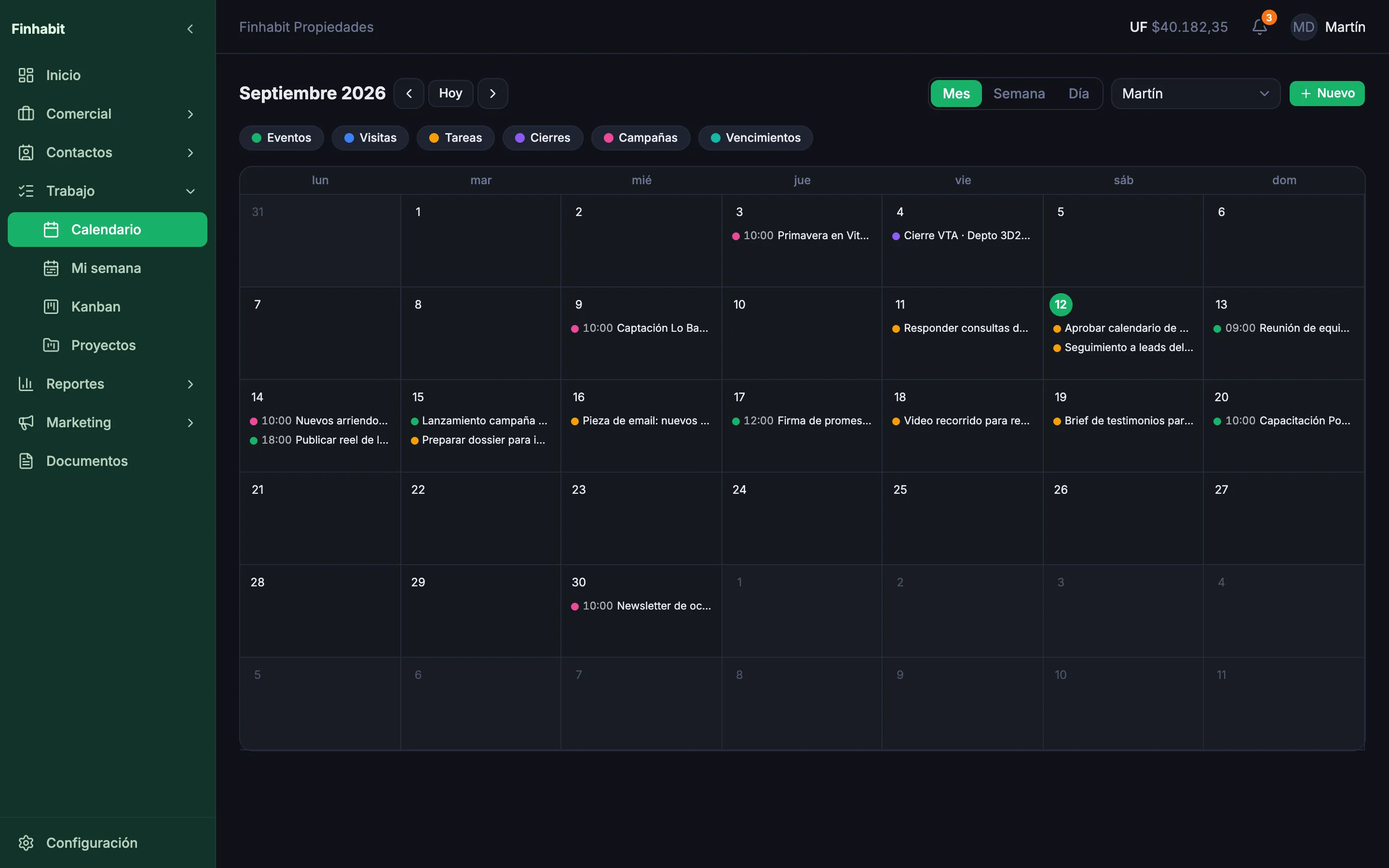
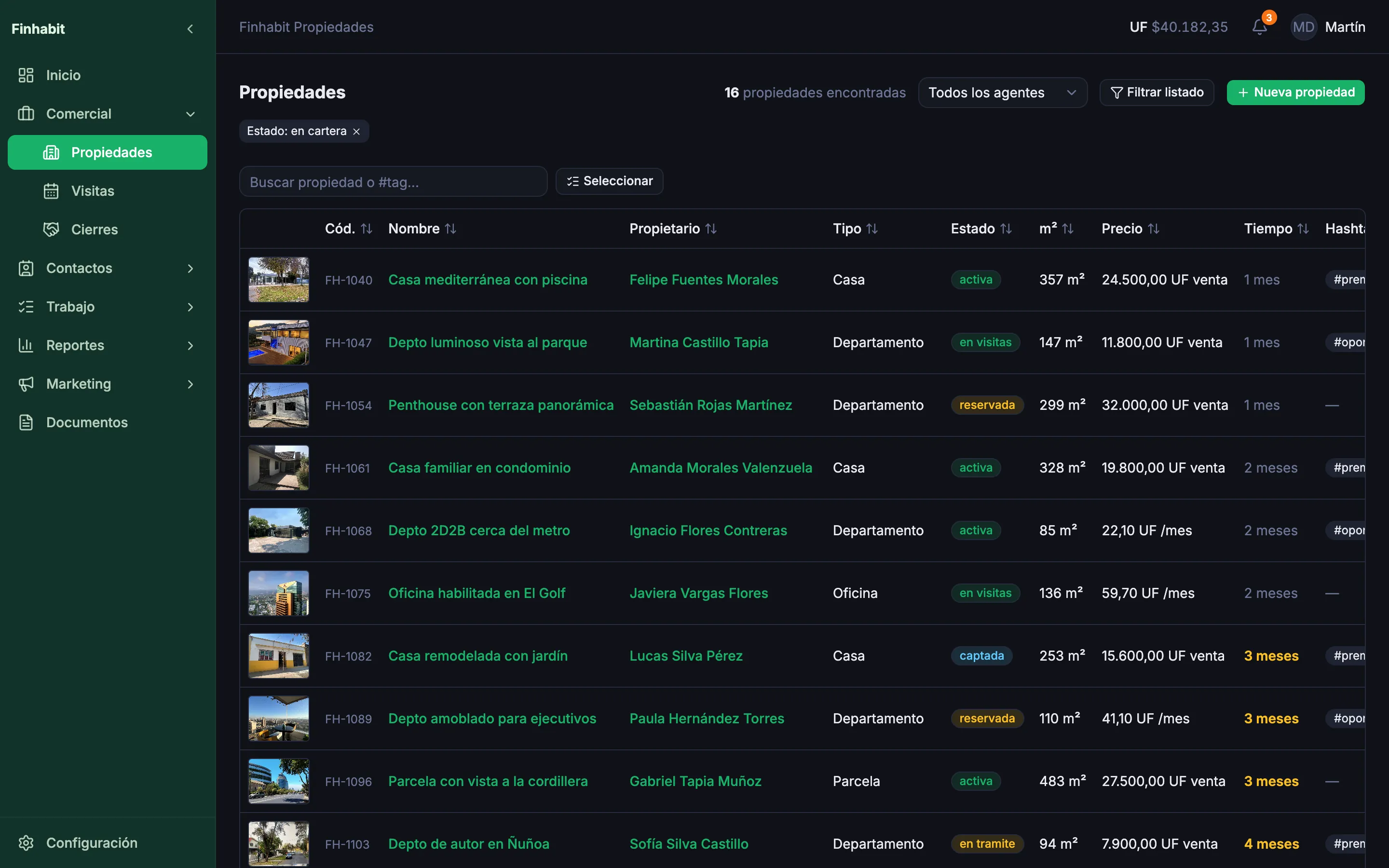
The CRM brings together management that used to be scattered, and it’s where the team works every day. Each agent opens a home screen with their numbers — portfolio, pipeline, viewings, deals this month; tasks live on a kanban with owner, priority and checklist; and a unified calendar brings together viewings, tasks, deals, campaigns and events, so nobody has to cross-check three tools. Every property and every client has its own record with a log, and permissions separate what an admin sees from what an agent sees.
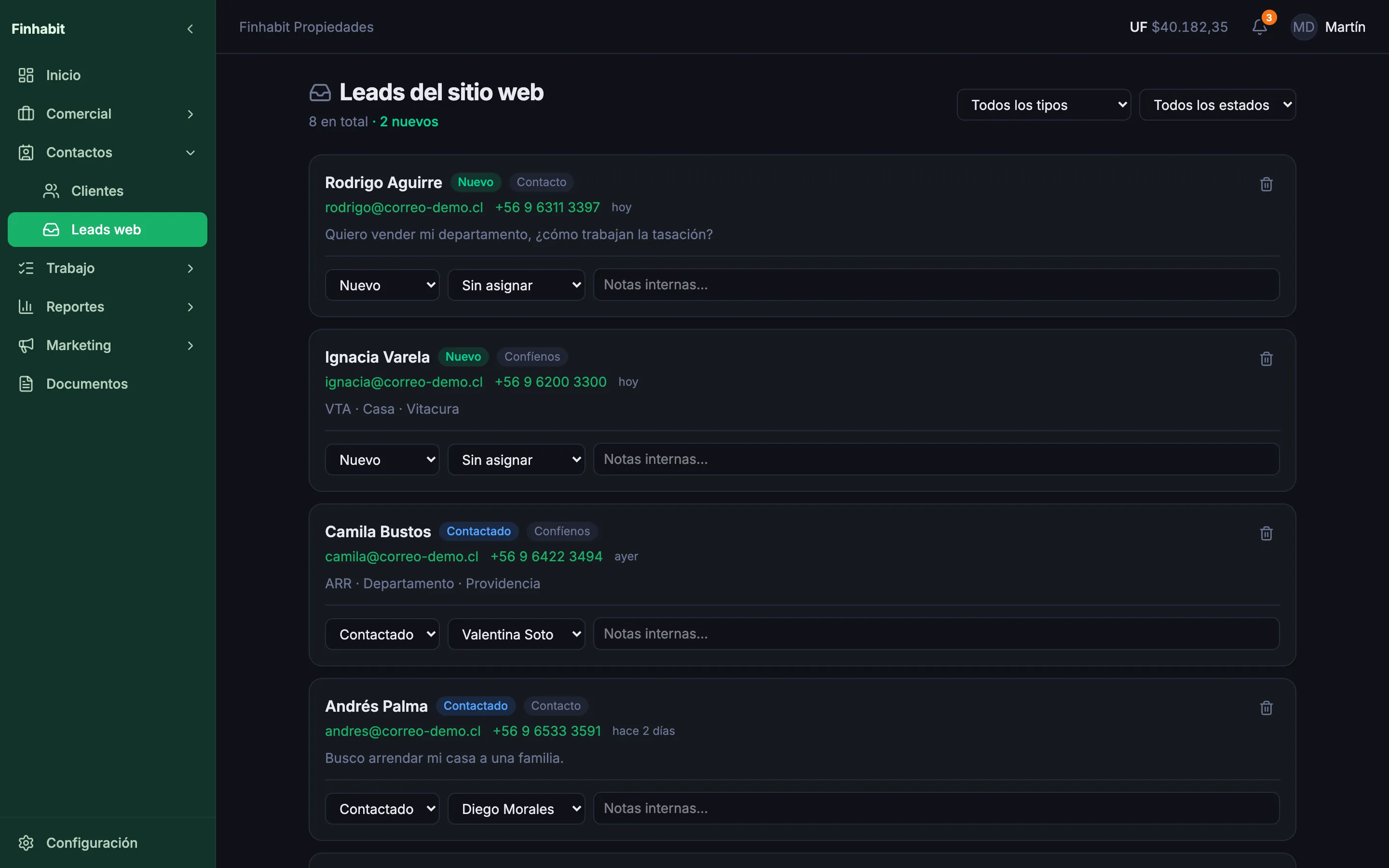
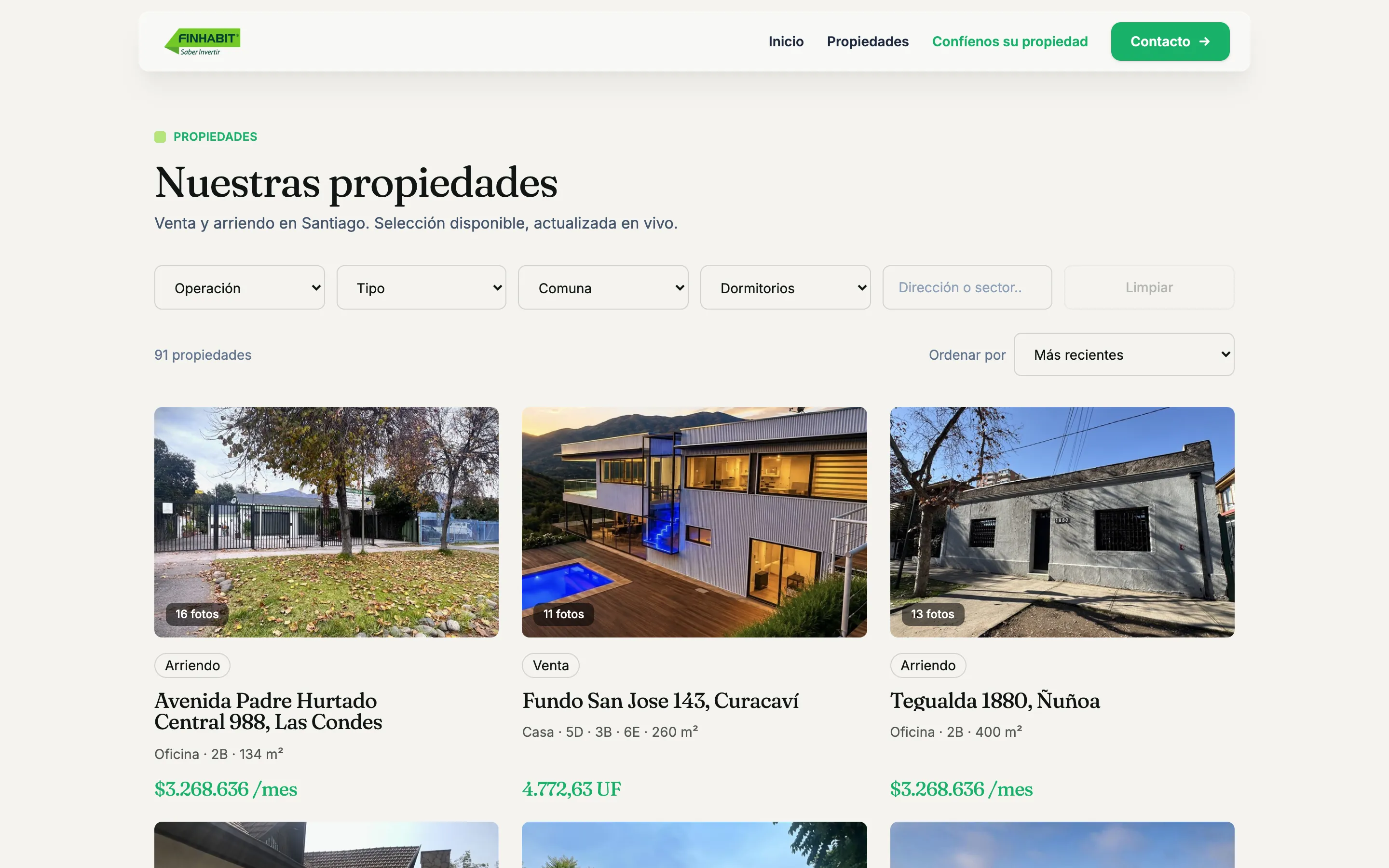
The website reads the portfolio live: a property is entered once in the CRM and shows up in the listing and on its public page, without retyping anything. What people write in the forms lands on its own in a leads inbox inside the CRM, ready to assign.
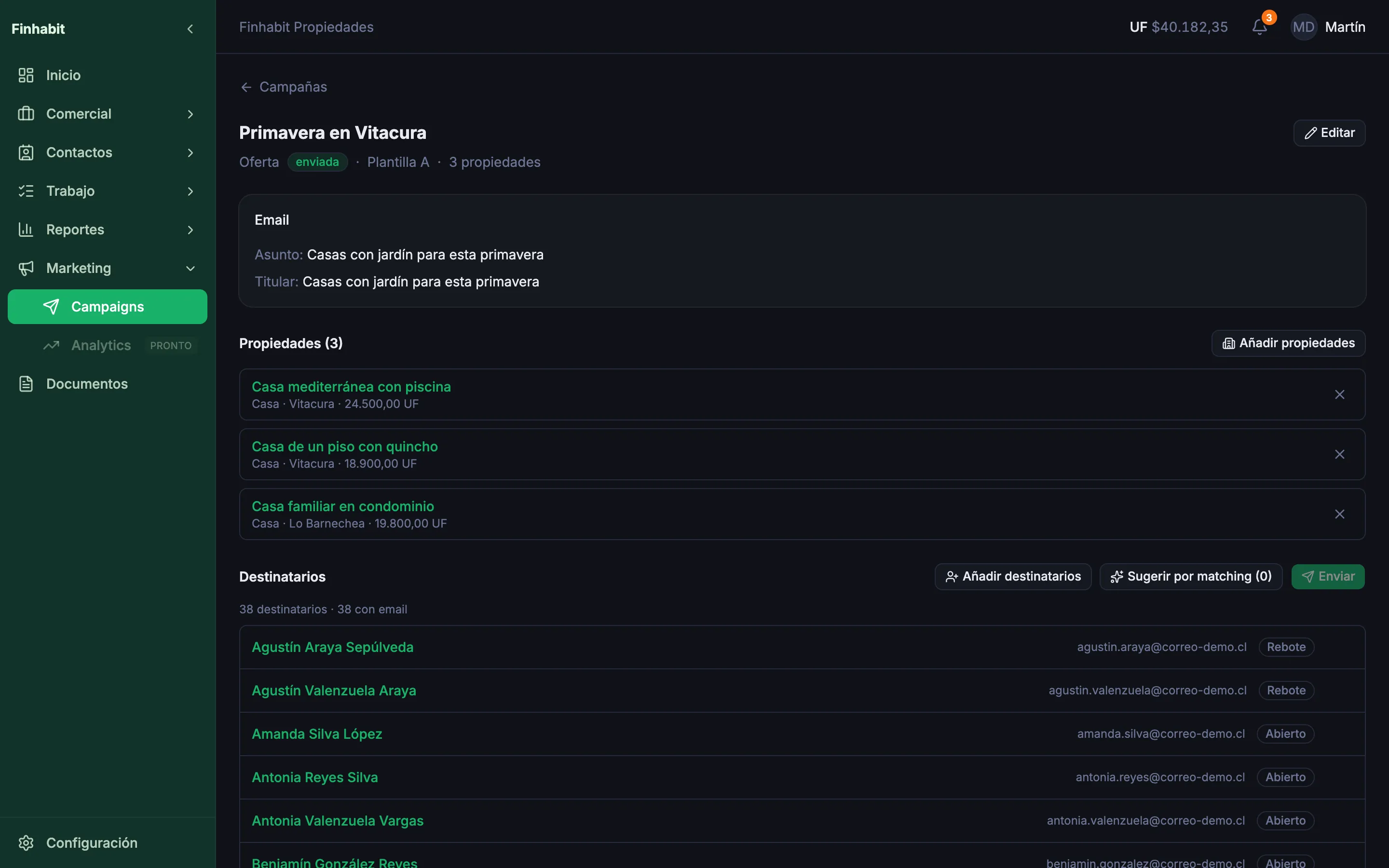
On top of that I built the automation layer: email campaigns that pull properties from the portfolio and track opens and clicks, daily notifications with overdue tasks, upcoming viewings and clients without contact, and the day’s UF and dollar rates updated on their own.
The brand video gives the agency a face in an industry where almost everyone looks the same.
About the screenshots
The CRM works with real client data, so its screenshots come from a copy of the system connected to made-up data: names, phone numbers, amounts and notes are fictional. The screens and the features are real.
PERIOD: DECEMBER 2025 — PRESENT
STATUS: CRM IN DAILY USE · PUBLIC WEBSITE IN PREPARATION
SCREENSHOTS: CRM WITH DEMO DATA